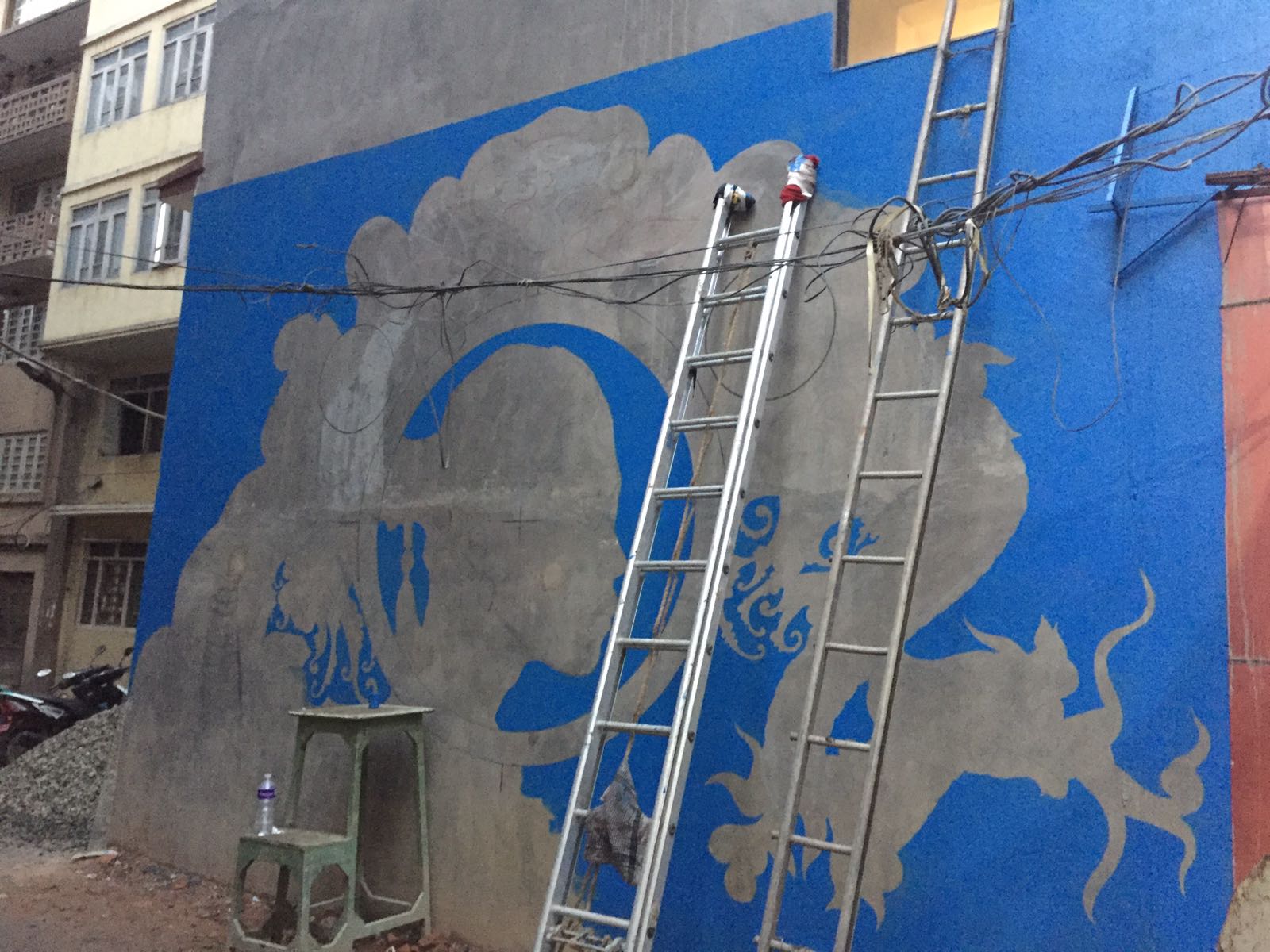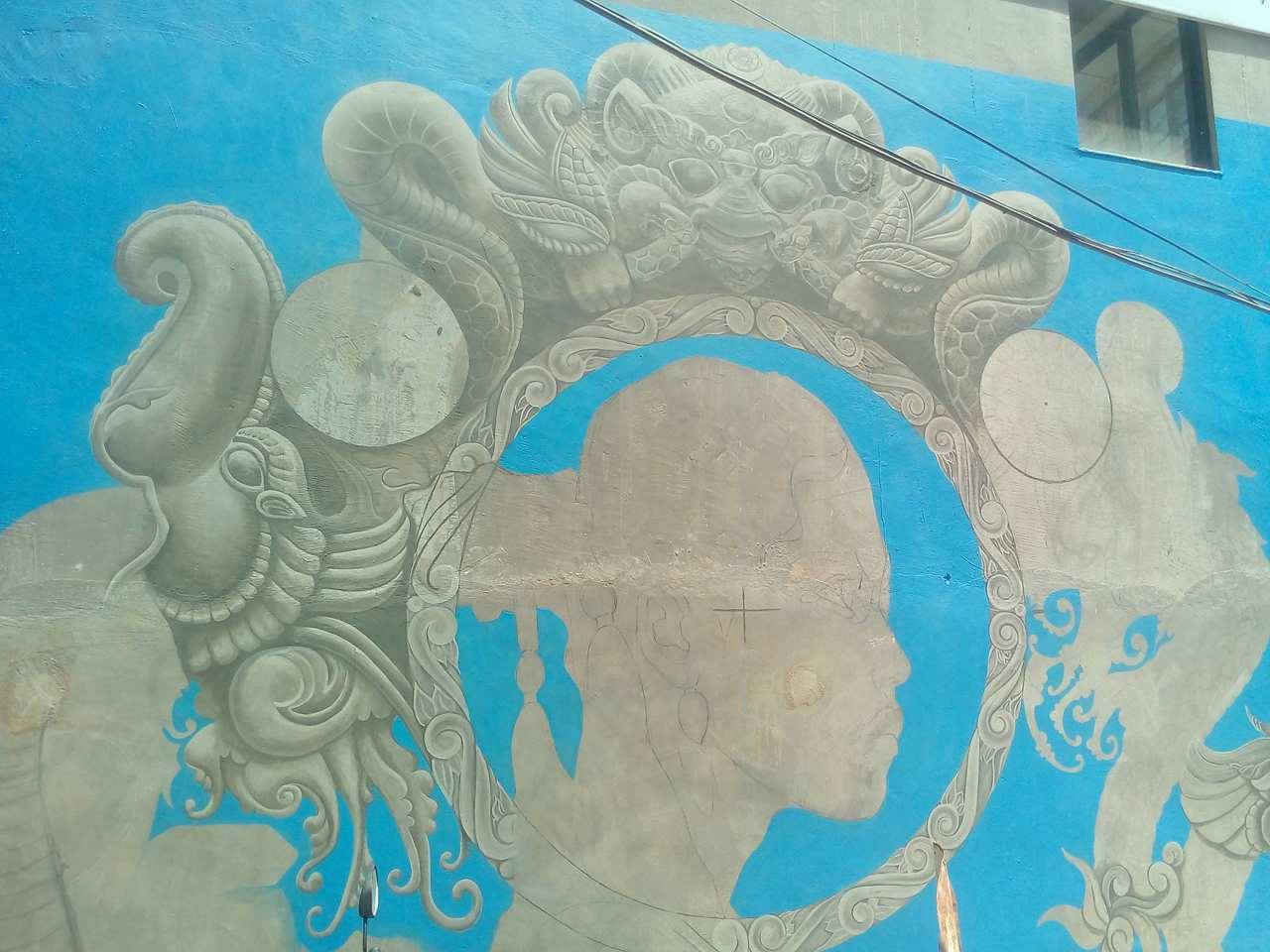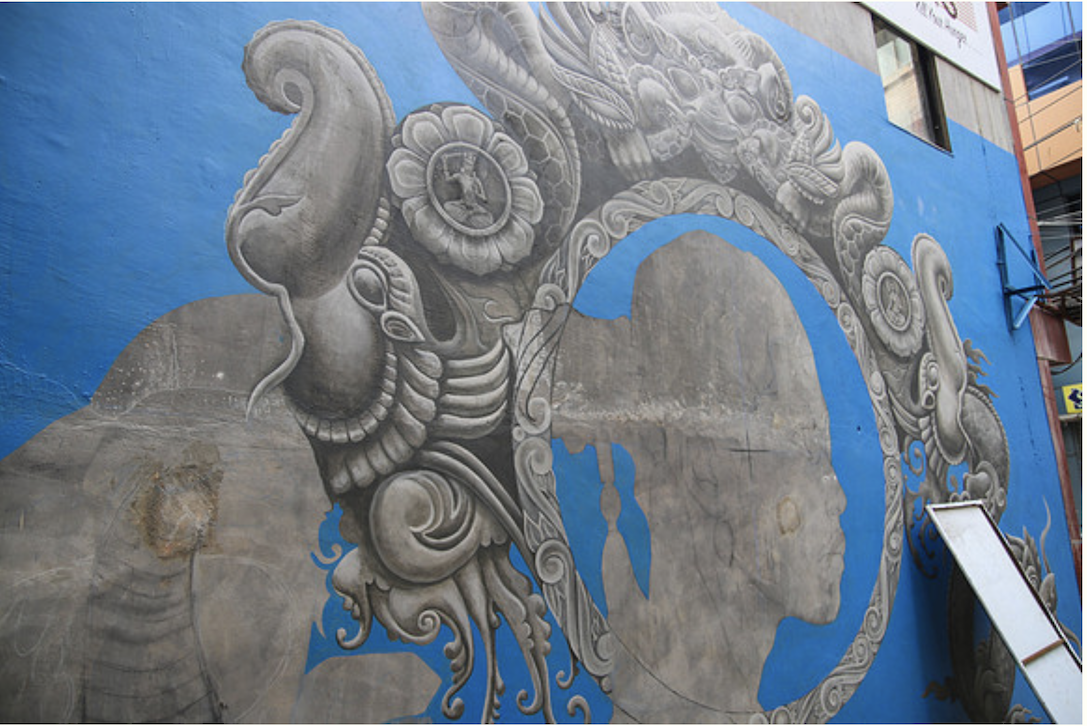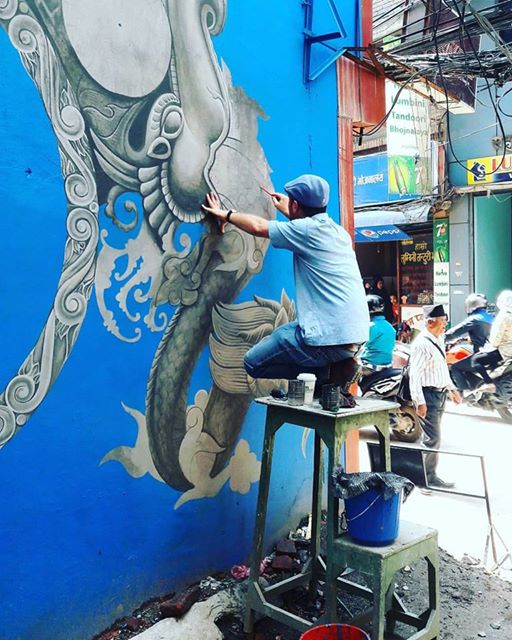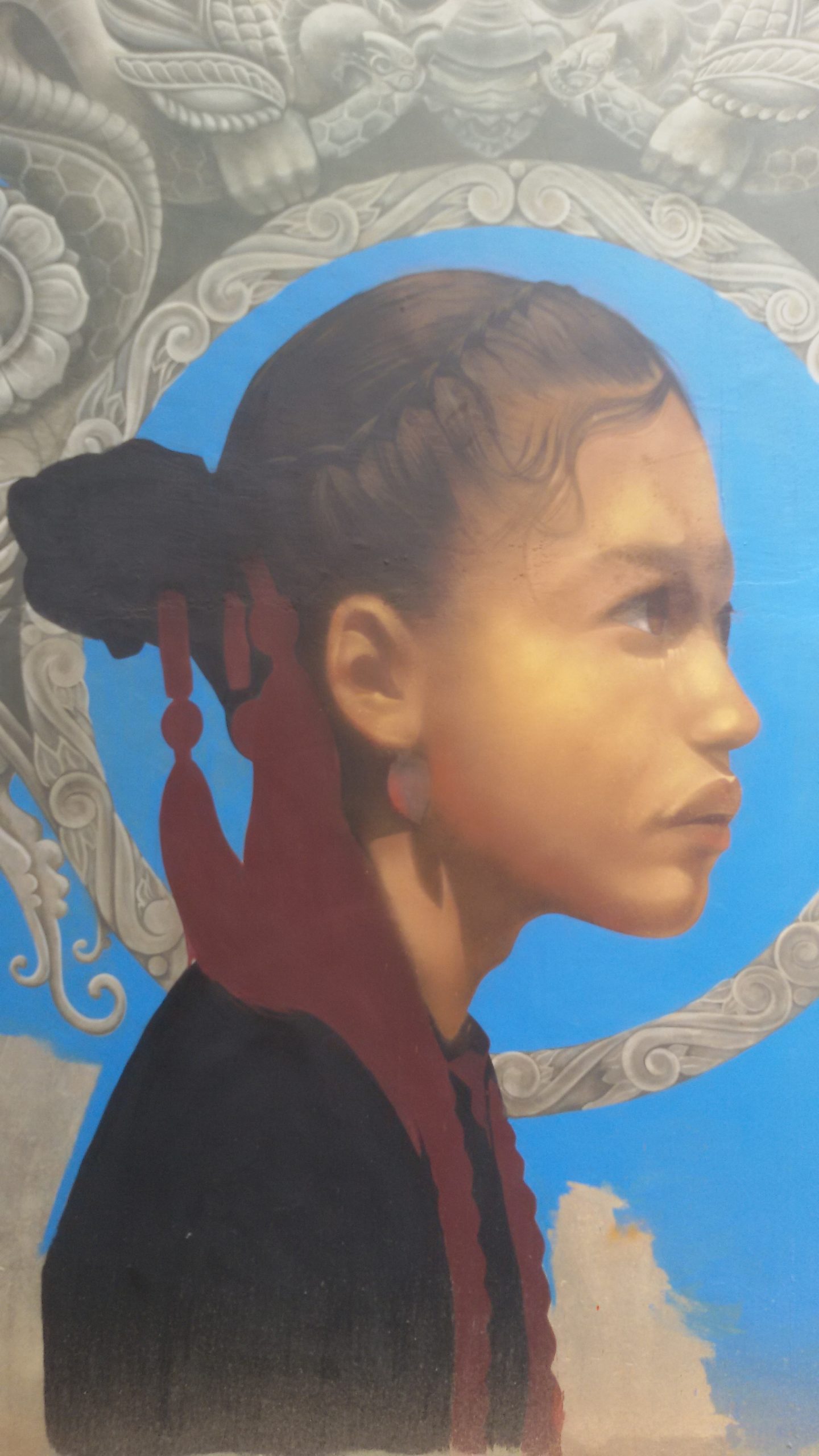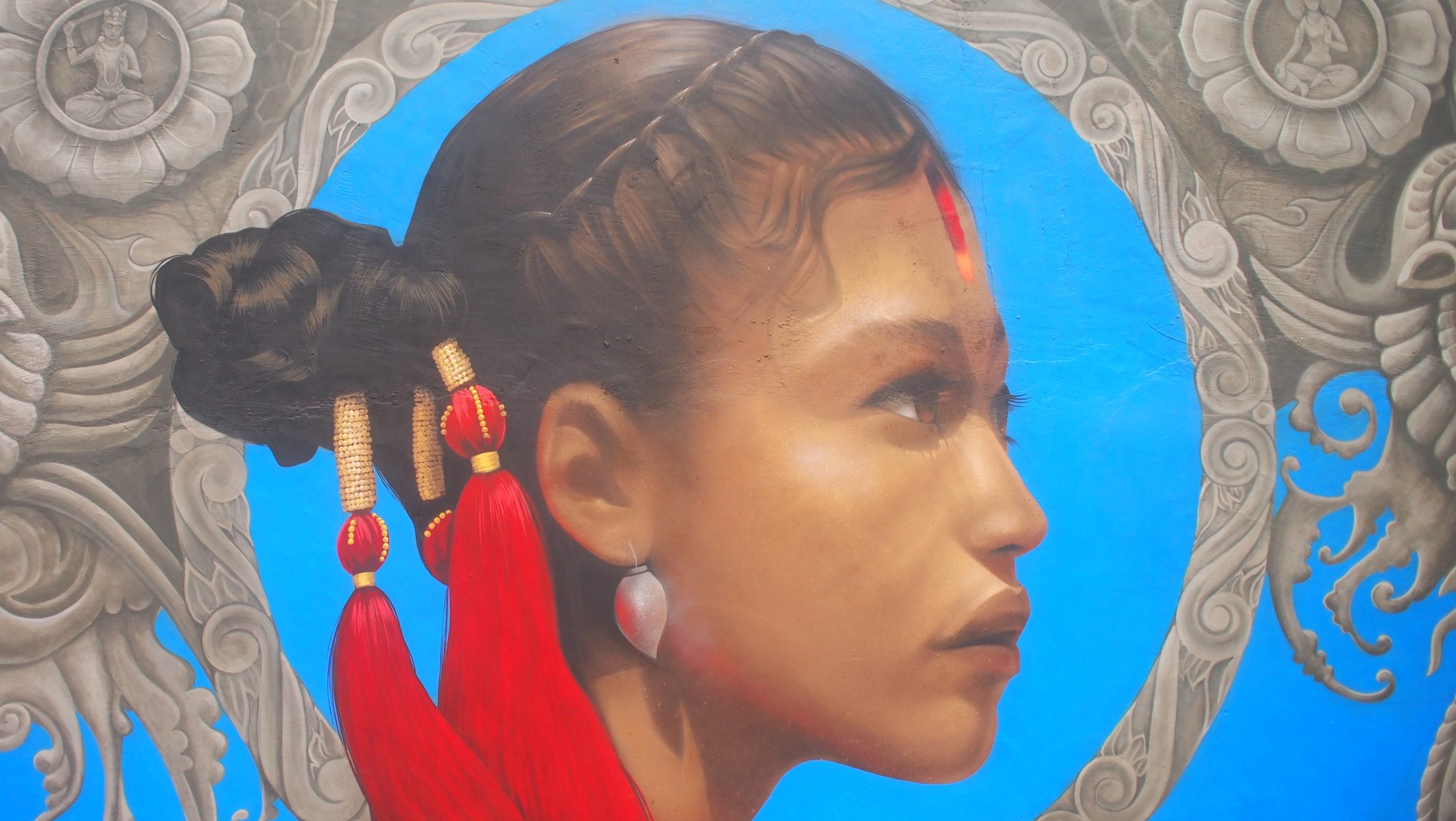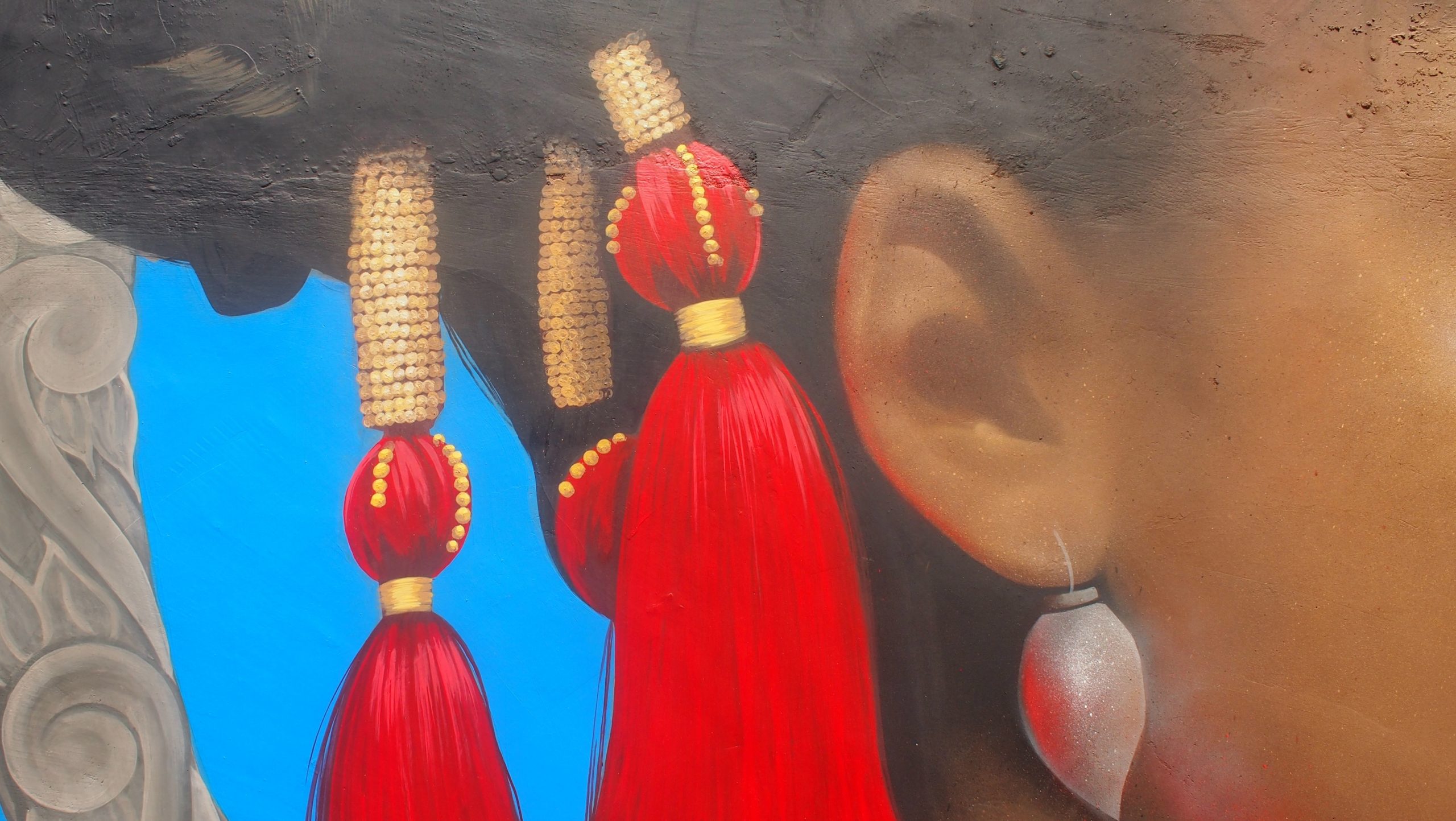


Kathmandu: Myths and Memory – Jhoche, Kathmandu, Nepal, (2018).
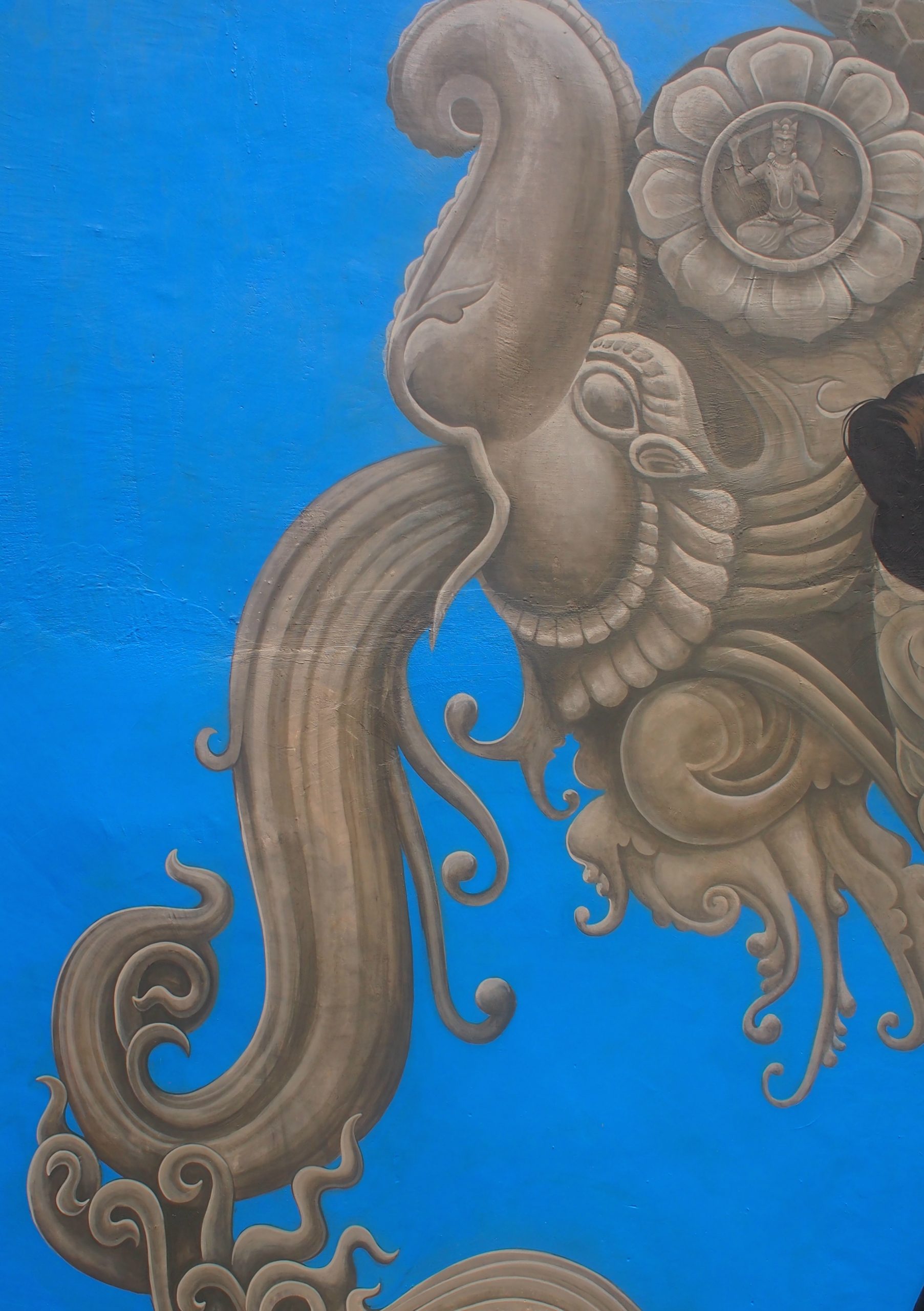
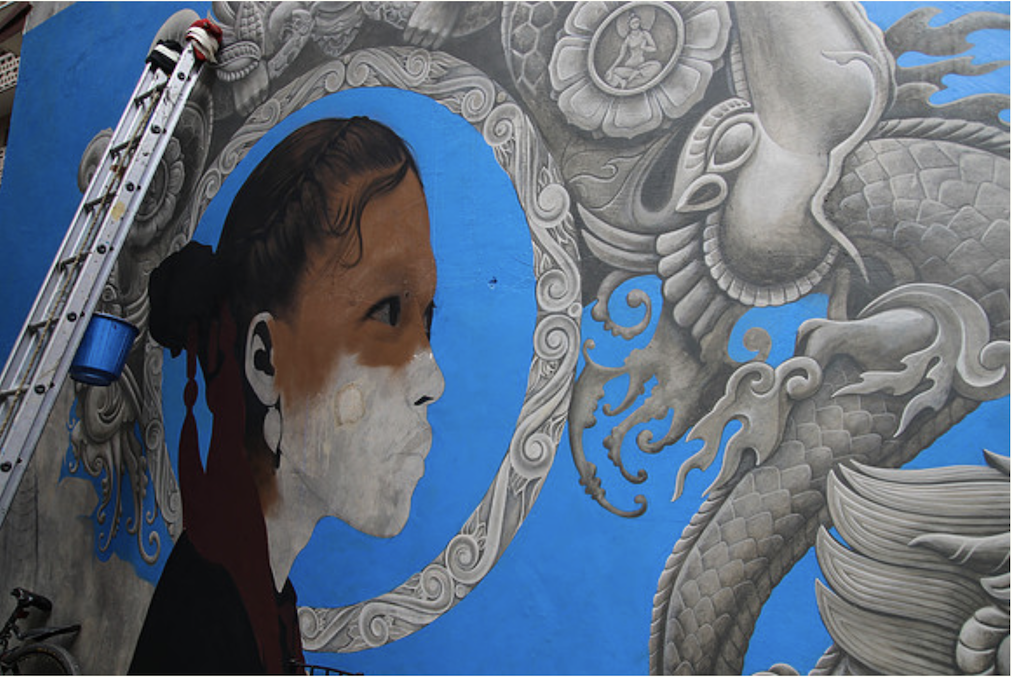
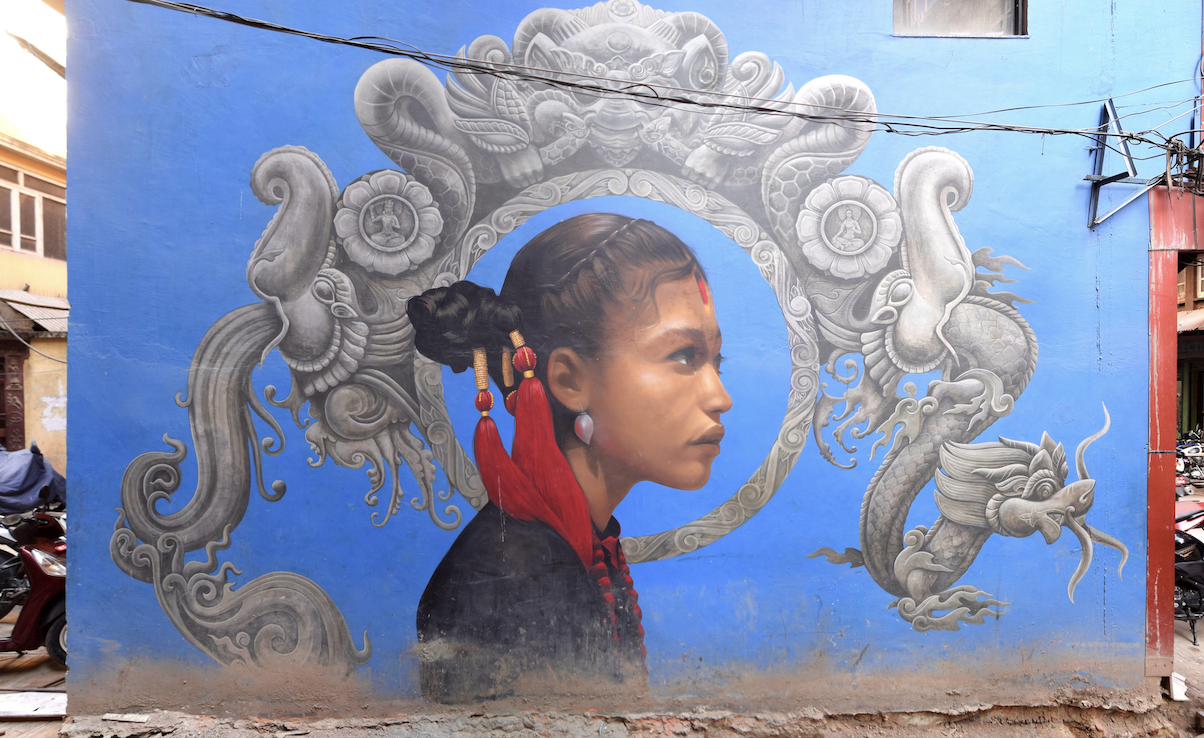
This mural was painted in 2018 with the help of two great artist friends from California, Priya Handa and Cece Carpio. I wanted to emulate the style of traditional temple stone carving found throughout the Kathmandu Valley, using this visual language to tell the legendary story of the city’s founding. The composition brings together a number of mythological figures and traditional motifs, although you would not find this particular combination of elements carved together in any single temple. Some aspects are my own artistic interpretation, including the dragon emerging from the mouth of one of the mythical water creatures.
The mural is a tribute to the Newar people of the Kathmandu Valley and the rich artistic traditions, myths and stories that have shaped the region for centuries. Inspired by the architecture, carvings and living heritage found throughout the valley, the work celebrates a culture that has profoundly influenced my own artistic journey.
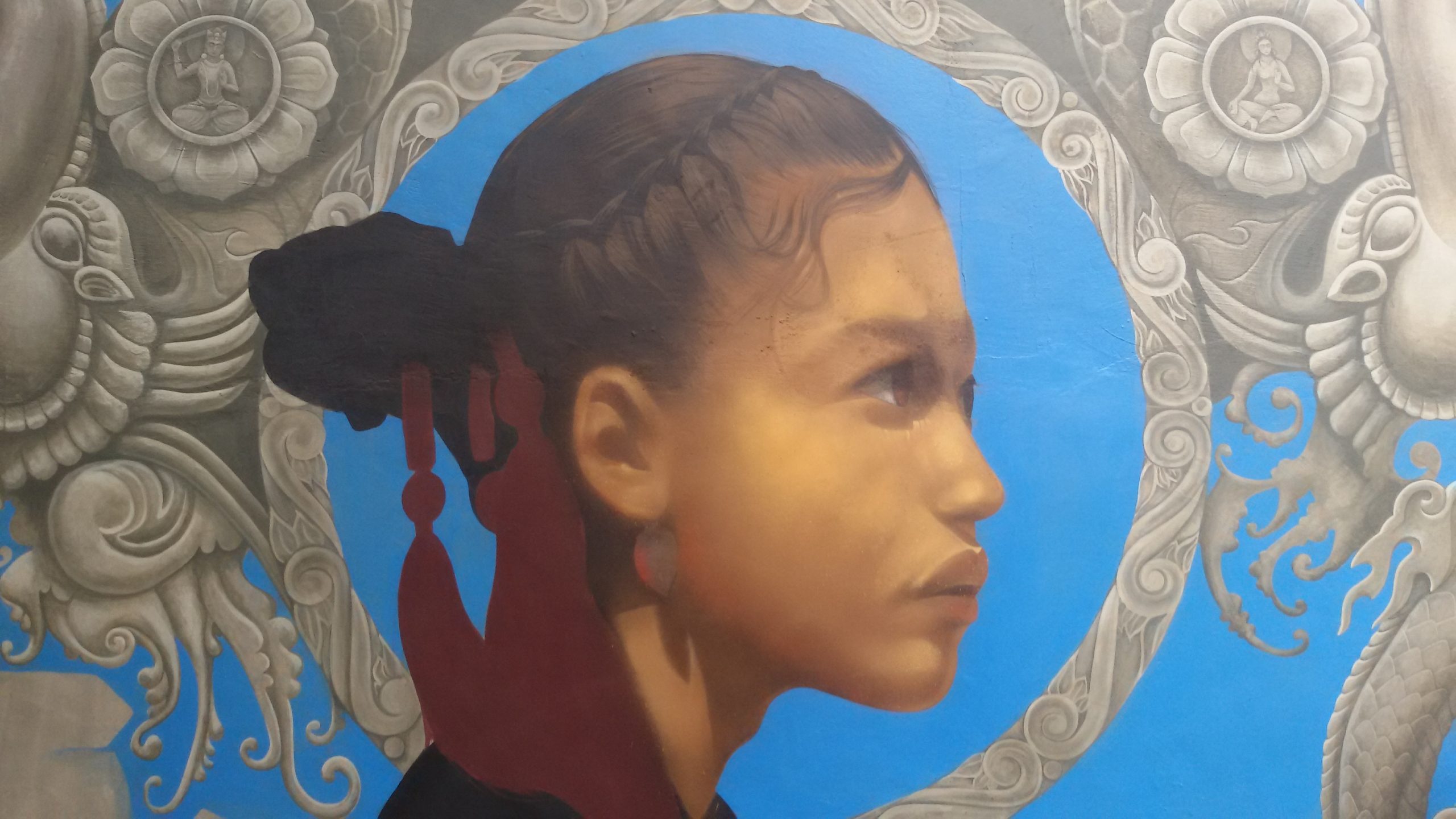
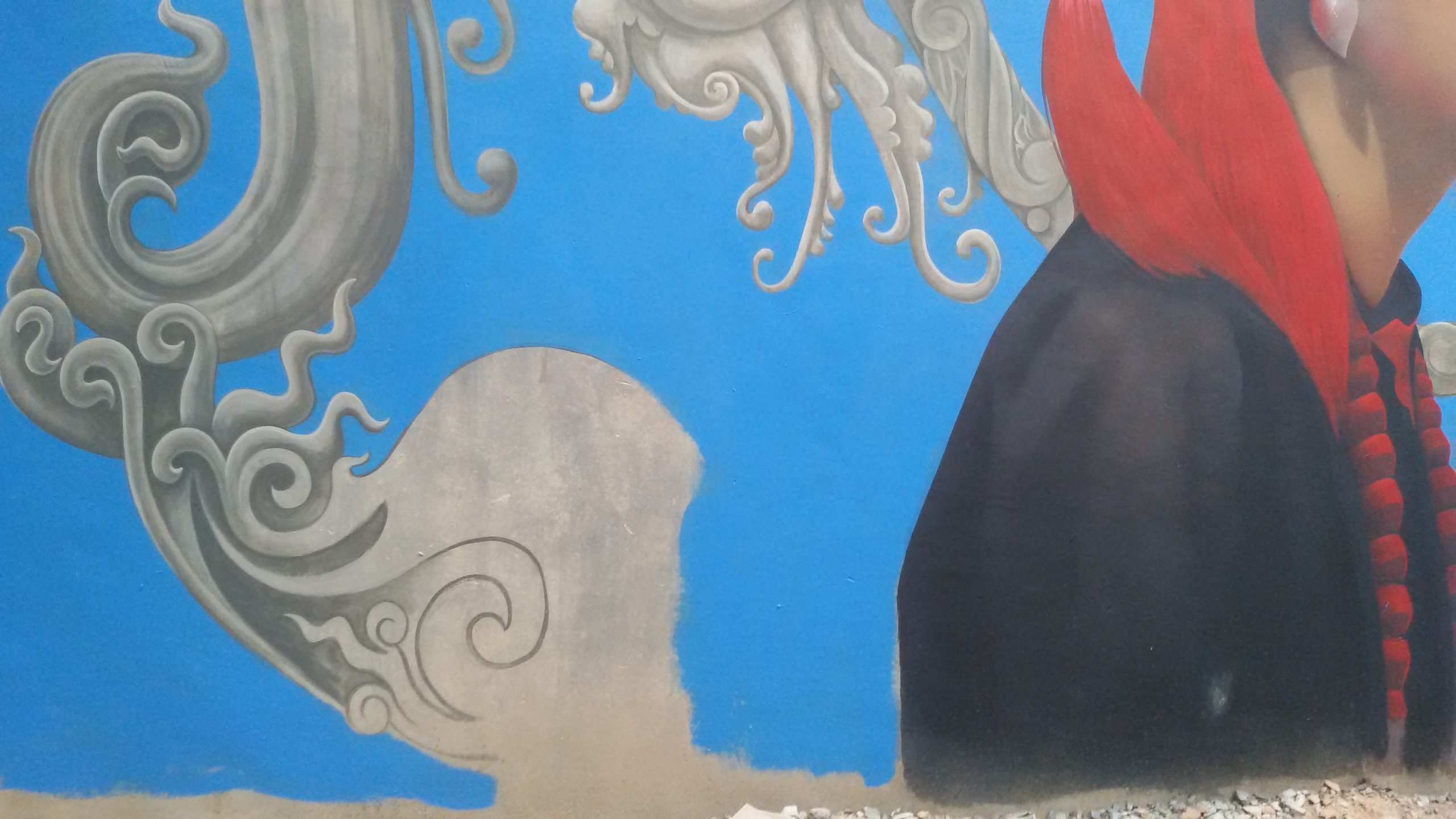
At the centre of the mural is a young Newar woman dressed in traditional clothing, surrounded by deities and symbolic figures drawn from Newar mythology and craftsmanship. She represents the connection between past and present, embodying a living culture that continues to evolve as Kathmandu changes. While the surrounding figures draw upon the city’s mythology and artistic heritage, her presence brings these traditions into the contemporary world, raising questions about how cultural identity is carried forward through periods of change.
Through these familiar cultural symbols, the mural explores the connections between people, mythology and place, highlighting the often-overlooked stories embedded within Kathmandu’s streets, temples and architecture.
Chhepu, Manjushri, Green Tara and the Water Guardians
The upper portion of the mural depicts a mythical figure known as Chhepu (also written Cheppu), associated with the founding legend of Kathmandu. He is traditionally represented with a snake held in his mouth and is commonly found above the entrances of temples throughout the Kathmandu Valley. His image serves a protective purpose, guarding the sacred space within.
According to legend, Kathmandu was once covered by a vast lake inhabited by numerous snakes. Manjushri, a Buddhist bodhisattva associated with wisdom and knowledge, was meditating on a hill at Swayambhunath when he saw a lotus flower growing in the middle of the lake. Recognising this as a sacred sign, he decided that the lake should be drained to create a place where a new city could be established. Taking his sword, he cut a gorge through the surrounding hills, allowing the water to flow out.
As the lake drained, Manjushri encountered a mysterious creature living in its waters. He asked the creature to help him rid the lake of the snakes, and it agreed on one condition: that Manjushri cover its eyes so that he would not see its face. However, Manjushri could not resist taking a sneak peek, much to the creature’s dismay. To make amends, he promised that the creature’s image would be placed above the doorways of temples throughout the new city. The creature, Chhepu, accepted the arrangement, and the way was cleared for Kathmandu to be established.
On either side of Chhepu are two lotus flowers, each containing an important Buddhist figure. Inside the lotus on the left is Manjushri himself, seated with his sword raised above his head. In the lotus on the right is Green Tara, a female Buddhist deity associated with compassion, protection and the alleviation of suffering.
Green Tara is traditionally associated with the Nepalese princess Bhrikuti, who married the Tibetan king Songtsen Gampo in the seventh century. According to Tibetan Buddhist tradition, Bhrikuti helped introduce Buddhism to Tibet and is identified with Green Tara. His other wife, the Chinese princess Wencheng, is traditionally associated with White Tara.
The other creatures depicted in the mural are Makaras, known in Newari as Hitimanga. These mythical aquatic creatures are traditionally incorporated into the design of stone water spouts, known in Nepali as Dhungedhara and in Newari as hiti. They serve as guardians of water sources and are often represented as fantastical combinations of animals, incorporating features of crocodiles, elephants, fish and other aquatic creatures. Their distinctive forms can be seen at traditional stone water spouts throughout the Kathmandu Valley.
On the left, water pours from the creature’s mouth, echoing the function of traditional stone water spouts found throughout Kathmandu. On the right, a dragon emerges instead. This is a more imaginative addition of my own, simply because I liked the idea of introducing a dragon into the composition.